Success message
Error message
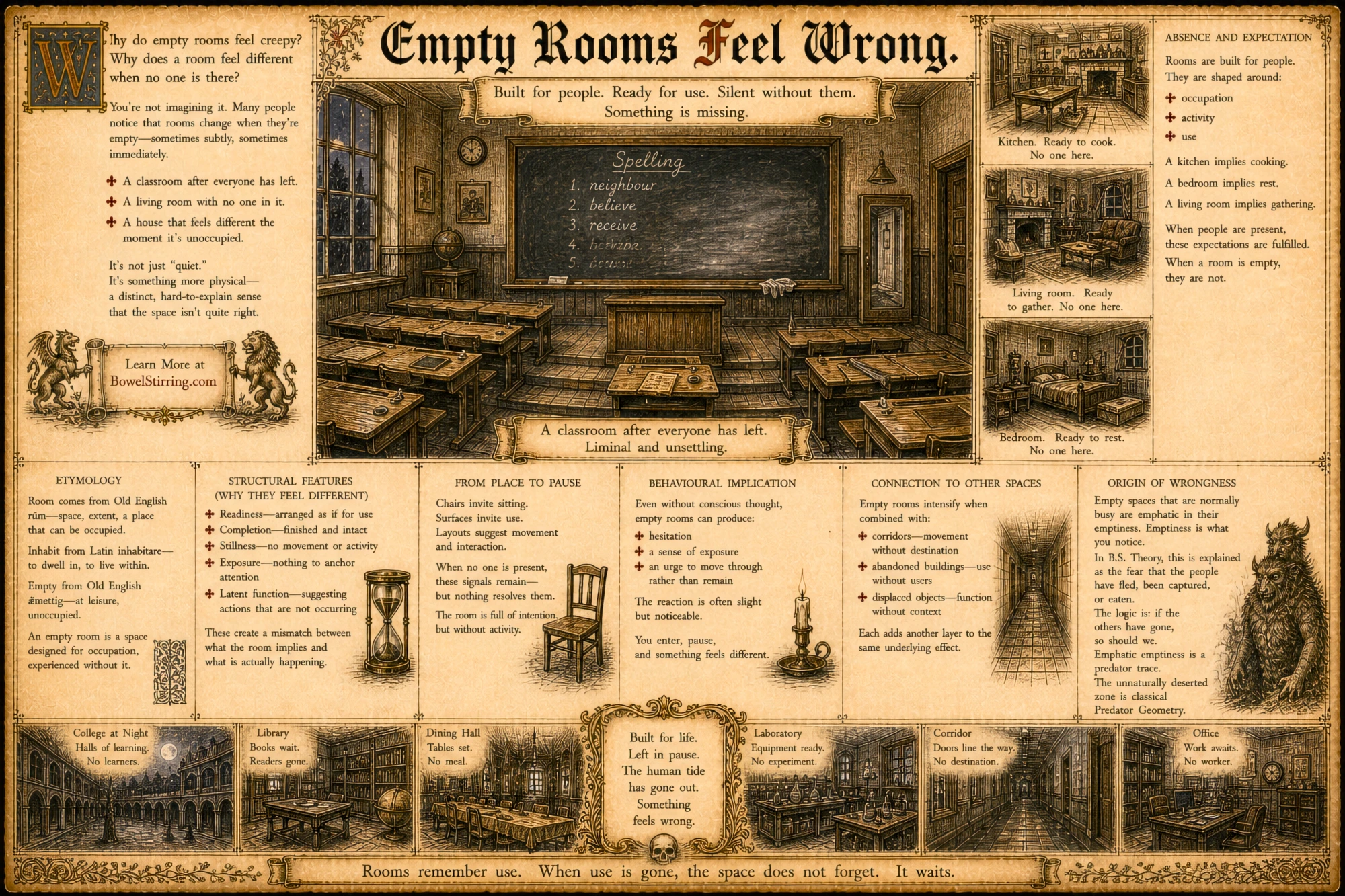
Why do empty rooms feel creepy? Why does a room feel different when no one is there?
You’re not imagining it. Many people notice that rooms change when they’re empty—sometimes subtly, sometimes immediately.
A classroom after everyone has left. A living room with no one in it. A house that feels different the moment it’s unoccupied.
It’s not just “quiet.” It’s something more physical— a distinct, hard-to-explain sense that the space isn’t quite right.
Buildings are not neutral. They are built for:
Presence and expectation
Rooms are built for people.
They are shaped around:
occupation
activity
use
A kitchen implies cooking. A bedroom implies rest. A living room implies gathering.
When people are present, these expectations are fulfilled. When a room is empty, they are not.
The word room comes from Old English rūm, meaning “space” or “extent”—a place that can be occupied.
To inhabit comes from Latin inhabitare—to dwell in, to live within.
Empty derives from Old English ǣmettig, meaning “at leisure” or “unoccupied,” but over time has come to mean lacking presence or purpose.
An empty room is therefore a space designed for occupation, experienced without it.
Empty rooms often share certain qualities:
readiness — arranged as if for use
completion — structurally finished and intact
stillness — no movement or activity
exposure — nothing to anchor attention
latent function — suggesting actions that are not occurring
These create a mismatch between:
what the room implies and
what is actually happening
A furnished room carries signals:
chairs invite sitting
surfaces invite use
layout suggests movement and interaction
When no one is present, these signals remain—but nothing resolves them. The room becomes a space full of intention, but without activity. This produces a subtle tension. The room appears ready, but nothing is happening.
Even without conscious thought, empty rooms can produce:
hesitation
a sense of exposure
an urge to move through rather than remain
The reaction is often slight but noticeable. You enter, pause, and something feels different. Not dangerous. Not dramatic. But not entirely neutral either.
Empty rooms often intensify when combined with other conditions:
corridors → movement without destination
abandoned buildings → use without users
displaced objects → function without context
Each of these adds another layer to the same underlying effect.
Empty spaces that are normally busy are emphatic in their emptiness. Emptiness is what you notice. In B.S. Theory, this is explained as the fear that the people have fled, been captured, or eaten. Emphatic emptiness is a predator trace that activates the bowel stirring reaction. Unnaturally deserted zones are classical Predator Geometry. They are even more B.S. if there are signs of interrupted work or a quick exit. This is why the abandoned utensils in the Mary Celeste are so unsettling. Empty = gone. Activity abandoned = left in a hurry. Things strewn = taken by force.
The logic is: if the others have gone, so should we.
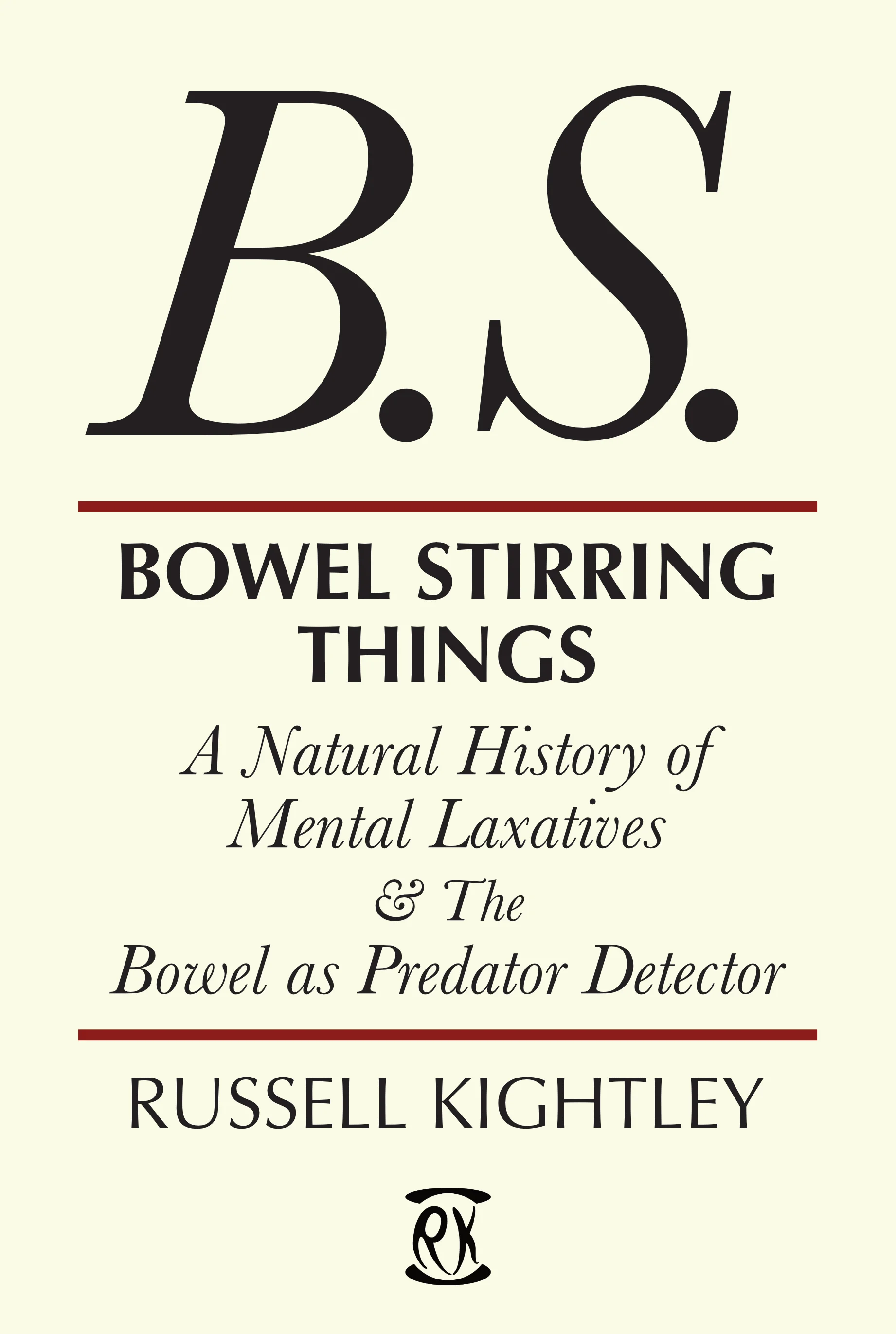
In 1996, Russell Kightley completed a manuscript on what he called “bowel stirring things.” It remained unpublished for thirty years.
In 2026, he revived and refined it as Bowel Stirring Things: A Natural History of Mental Laxatives & The Bowel as Predator Detector—a study of unsettling places and the geometries that provoke an immediate, visceral response.