Success message
Error message
Why do liminal spaces feel weird? Why do transitional places feel so unsettling? Wht do thresholds and conduits feel so wrong?
You’re not imagining it. Many people feel a subtle but unmistakable reaction to spaces that seem to sit between states—neither fully one thing nor another.
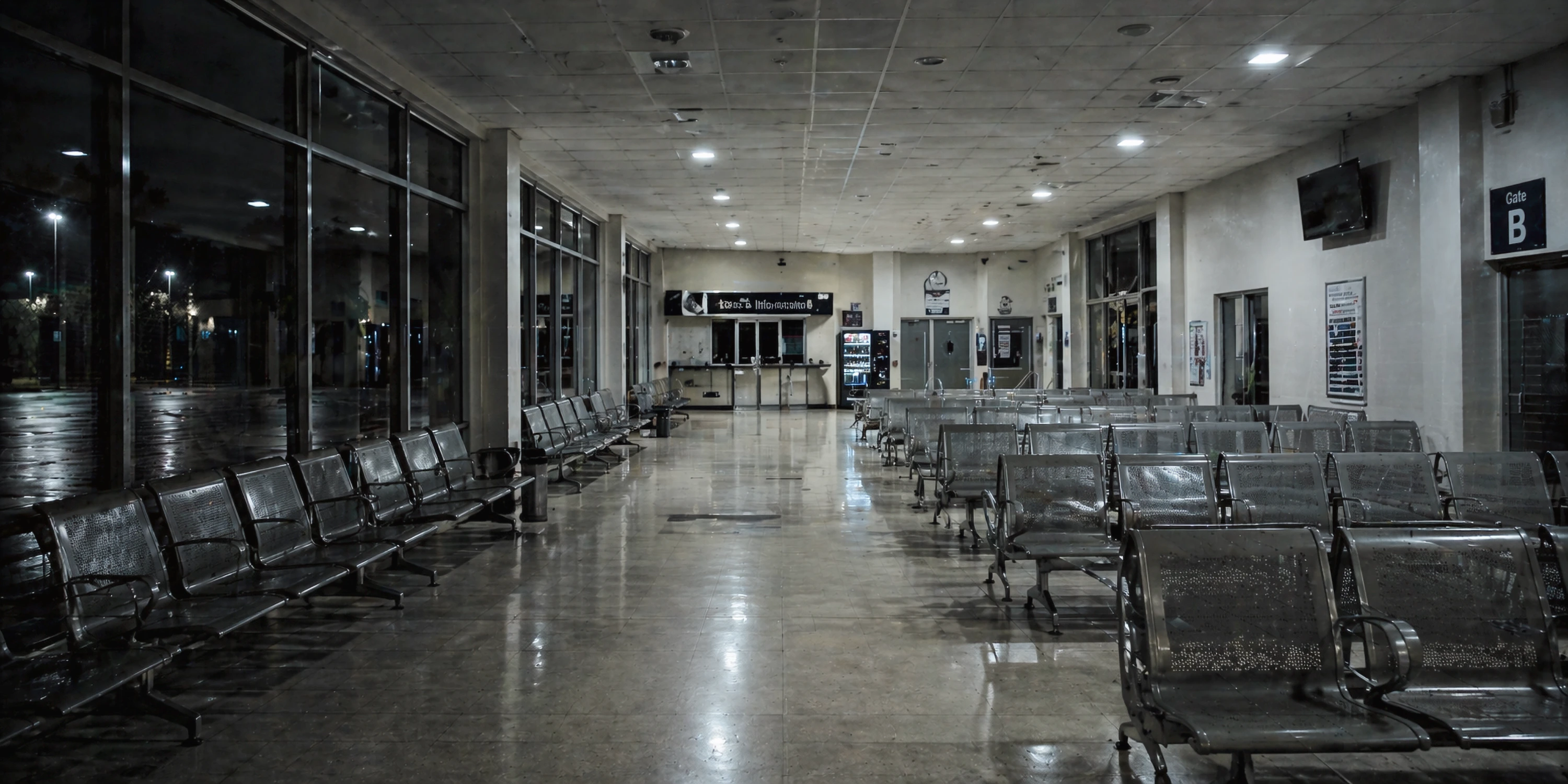
An empty corridor between rooms. A stairwell between floors. A waiting room between arrival and departure.
It’s not just aesthetic. It’s something more immediate— a quiet, hard-to-explain sense that the space is not meant for staying.
A deserted petrol station. A shopping mall at night. The edge of a garden.
They straddle domains—and this bridging tugs at our innards. We must move on. Do not dawdle in liminal spaces.
Liminal spaces are, by definition, transitional. They connect:
one room to another
one place to the next
one phase of activity to what follows
one zone or medium to another (air to water in pools)
They are not destinations. They are passages.
A corridor is for moving through. A doorway is for crossing. A platform is for waiting to leave.
When you remain in these spaces—especially when they are empty—you feel the tug of transition.
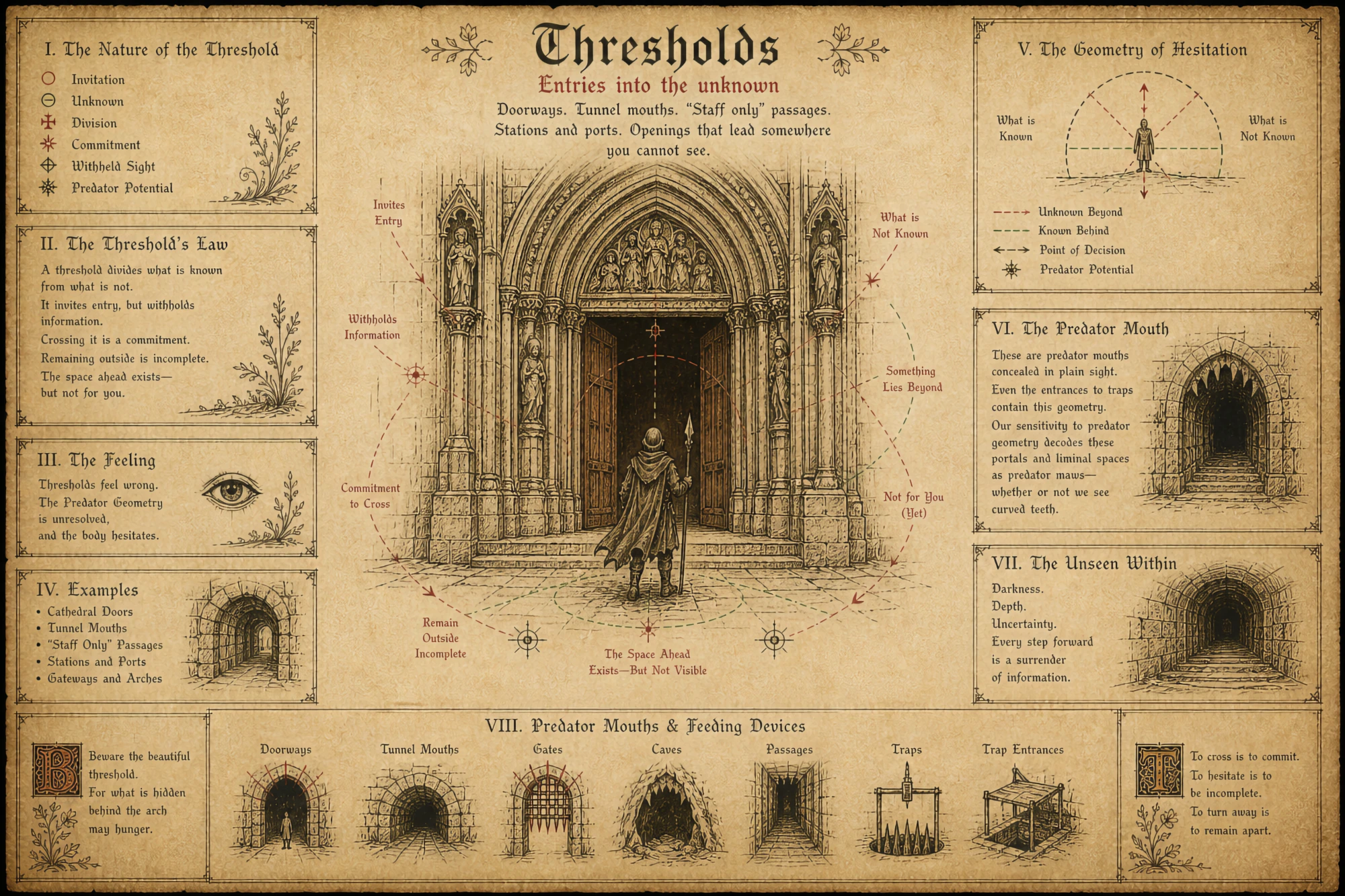
Liminal comes from the Latin limen—a threshold. A threshold is not a place you inhabit. It is a boundary you cross. Related ideas reinforce this:
intermediate — existing between two stages
transition — a passage from one state to another
subliminal — below the level of conscious awareness
All point to the same condition, a space that is not fully one thing or another. A liminal space exists at the edge of definition.
Liminal spaces tend to share certain properties:
in-betweenness — positioned between defined places or functions
directionality — implying movement rather than rest
incompleteness — lacking a clear, stable purpose
transience — meant to be passed through, not occupied
ambiguity — unclear whether you should remain or move on
These create a mismatch between what the space suggests and how it is currently being used. They are metastable.
In normal use, liminal spaces are almost invisible. You move through them without noticing, without stopping, and without reflecting. Their function is fulfilled by movement. But when movement stops—when the space is empty, quiet, or prolonged—the structure becomes visible. The space is revealed as a passage without passage. This produces a subtle tension. The space implies transition, but no transition is taking place. It becomes a frozen or suspended threshold.
Even without conscious thought, liminal spaces can produce:
hesitation
a sense of exposure
an urge to move through rather than remain
The reaction is often slight, but persistent. You pause, look around, and something doesn’t settle. The space feels dangerous and unstable.
Liminal conditions often overlap with other forms of spatial unease:
corridors → movement without destination
empty rooms → occupation without occupants
abandoned buildings → function without use
displaced objects → context without coherence
Each expresses a different version of the same underlying effect.
Liminal spaces feel unstable—literally on the threshold—and there is an urge to have them collapse into one state or another. They feel metastable, which is unsettling, for we crave resolution and certainty.
Liminal spaces are often transit stations, and any kind of movement creates vulnerability. They are paths or portals between refuges, or between refuges and exposure, and this generates a kind of electricity (a strong B.S. Gradient). They also limit movement, funnelling you from one place to another. Funnels are potent Predator Geometries. Liminal spaces are charged with latent threat.
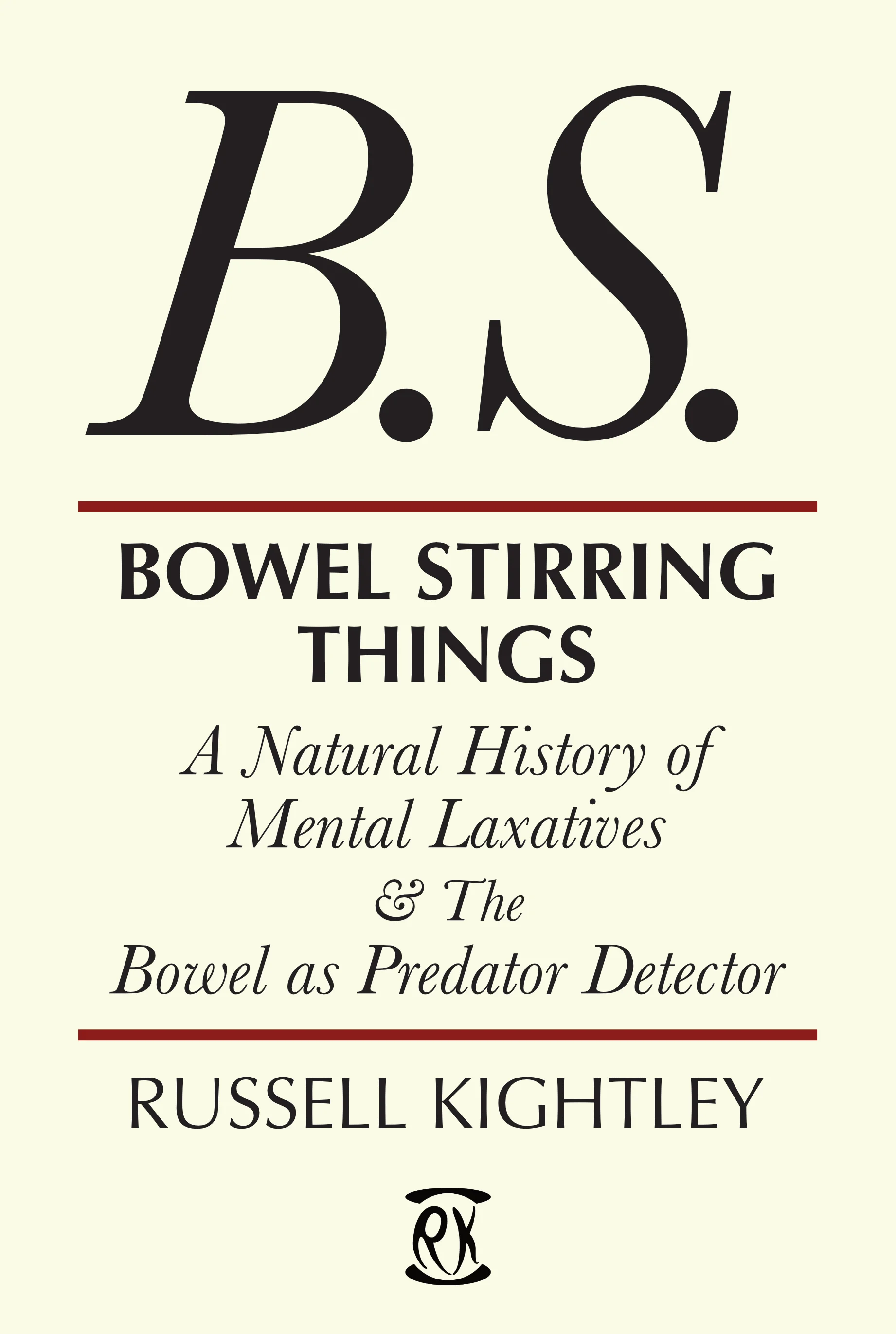
In 1996, Russell Kightley completed a manuscript on what he called “bowel stirring things.” It remained unpublished for thirty years.
In 2026, he revived and refined it as Bowel Stirring Things: A Natural History of Mental Laxatives & The Bowel as Predator Detector—a study of unsettling places and the geometries that provoke an immediate, visceral response.