Success message
Error message
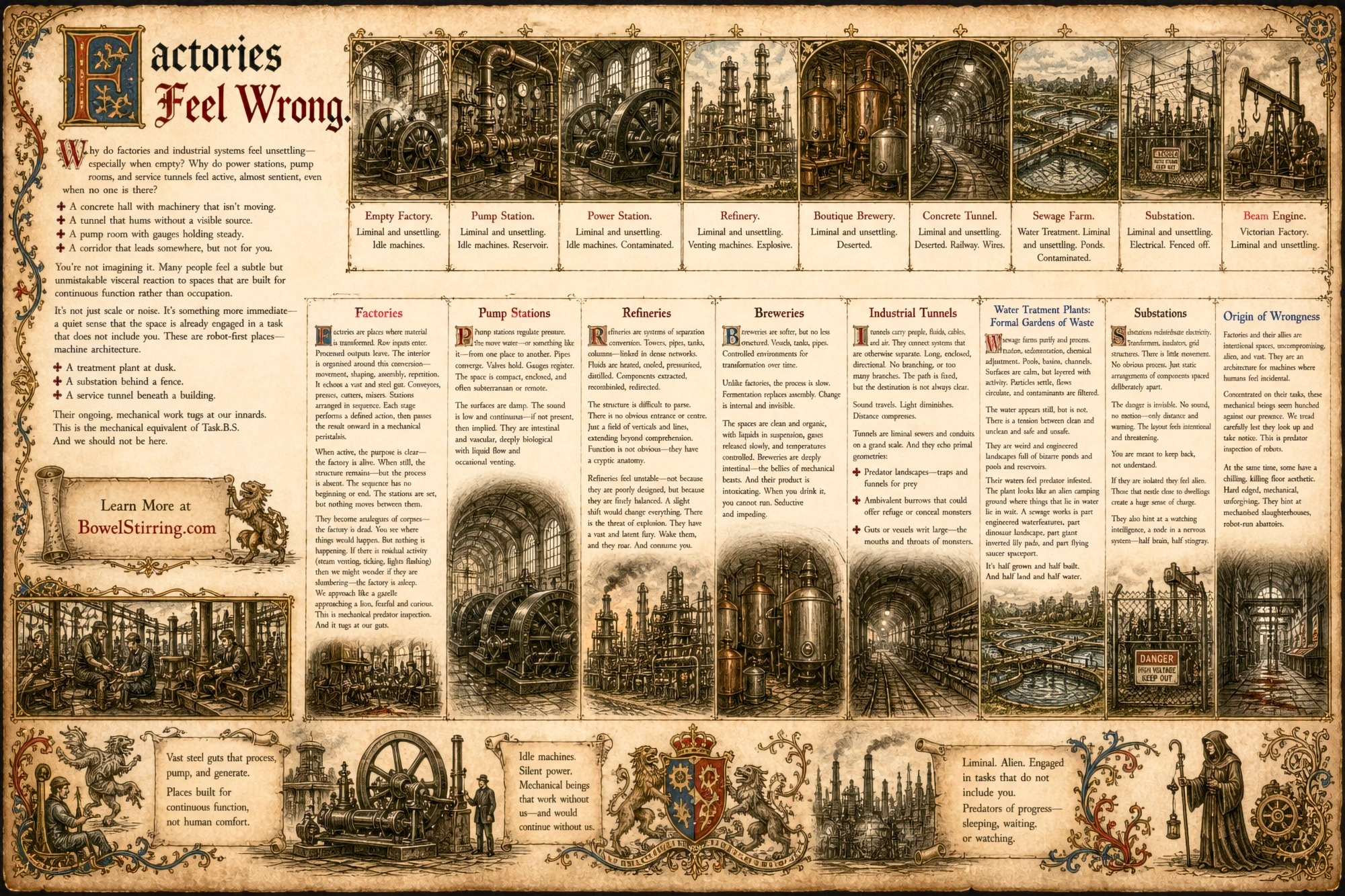
Why do factories and industrial systems feel unsettling—especially when empty? Why do power stations, pump rooms, and service tunnels feel active, almost sentient, even when no one is there?
A concrete hall with machinery that isn’t moving. A tunnel that hums without a visible source. A pump room with gauges holding steady. A corridor that leads somewhere, but not for you.
You’re not imagining it. Many people feel a subtle but unmistakable visceral reaction to spaces that are built for continuous function rather than occupation.
It’s not just scale or noise. It’s something more immediate— a quiet sense that the space is already engaged in a task that does not include you. These are robot-first places_machine architecture.
A treatment plant at dusk. A substation behind a fence. A service tunnel beneath a building.
Their ongoing, mechanical work tugs at our innards. This is the mechanical equivalent of Task.B.S.
And we should not be here.
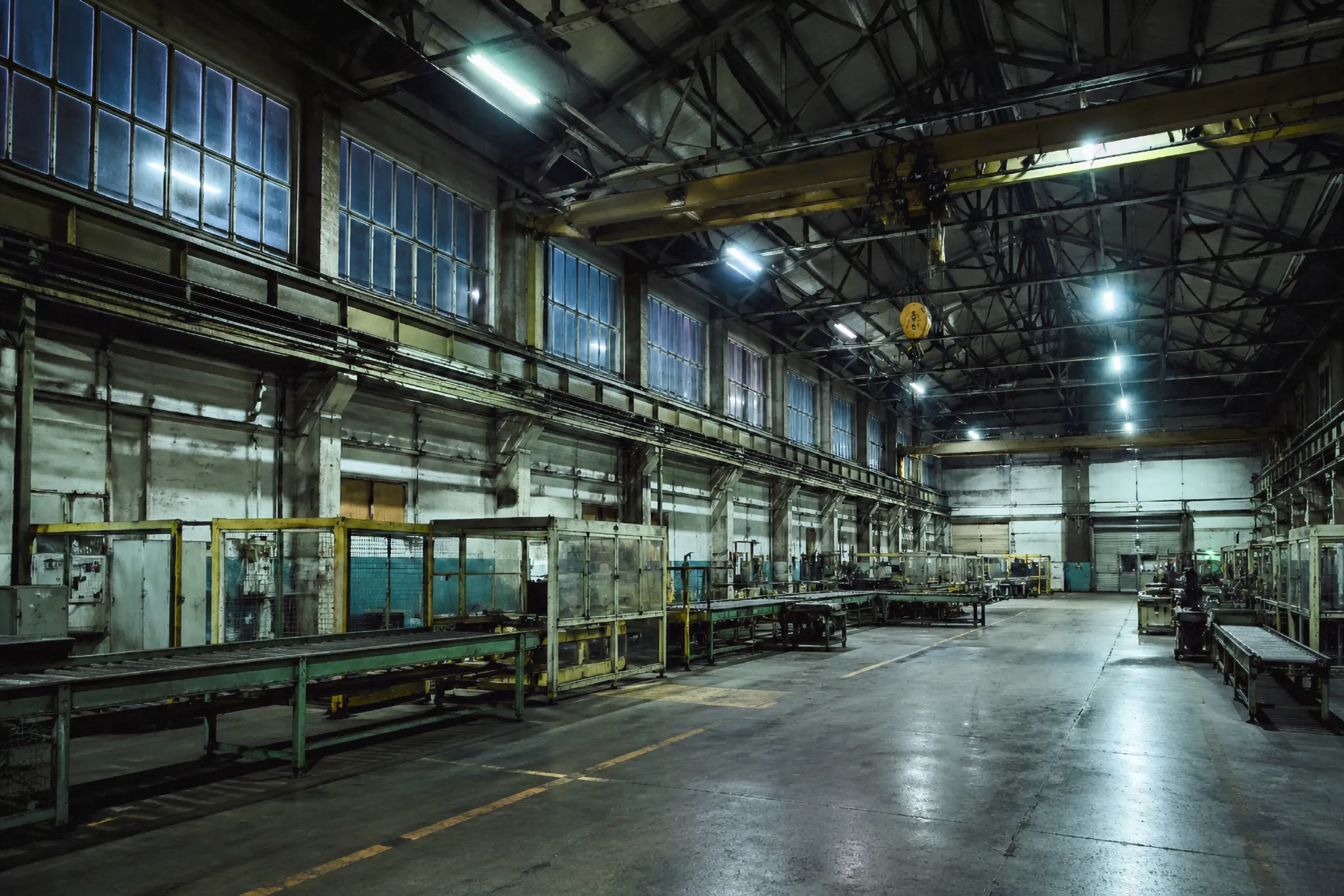
Factories are places where material is transformed. Raw inputs enter. Processed outputs leave. The interior is organised around this conversion—movement, shaping, assembly, repetition. It echoes a vast and steel gut. Conveyors, presses, cutters, mixers. Stations arranged in sequence. Each stage performs a defined action, then passes the result onward in a mechanical persitalsis.
When active, the purpose is clear—the factory is alive. When still, the structure remains—but the process is absent. The sequence has no beginning or end. The stations are set, but nothing moves between them. They become analogues of corpses—the factory is dead. You see where things would happen. But nothing is happening. If there is residual activity (steam venting, ticking, lights flashing) then we might wonder if they are slumbering—the factory is asleep. We approach like a gazelle approaching a lion, fearful and curious. This is mechanical predator inspection. And it tugs at our guts.
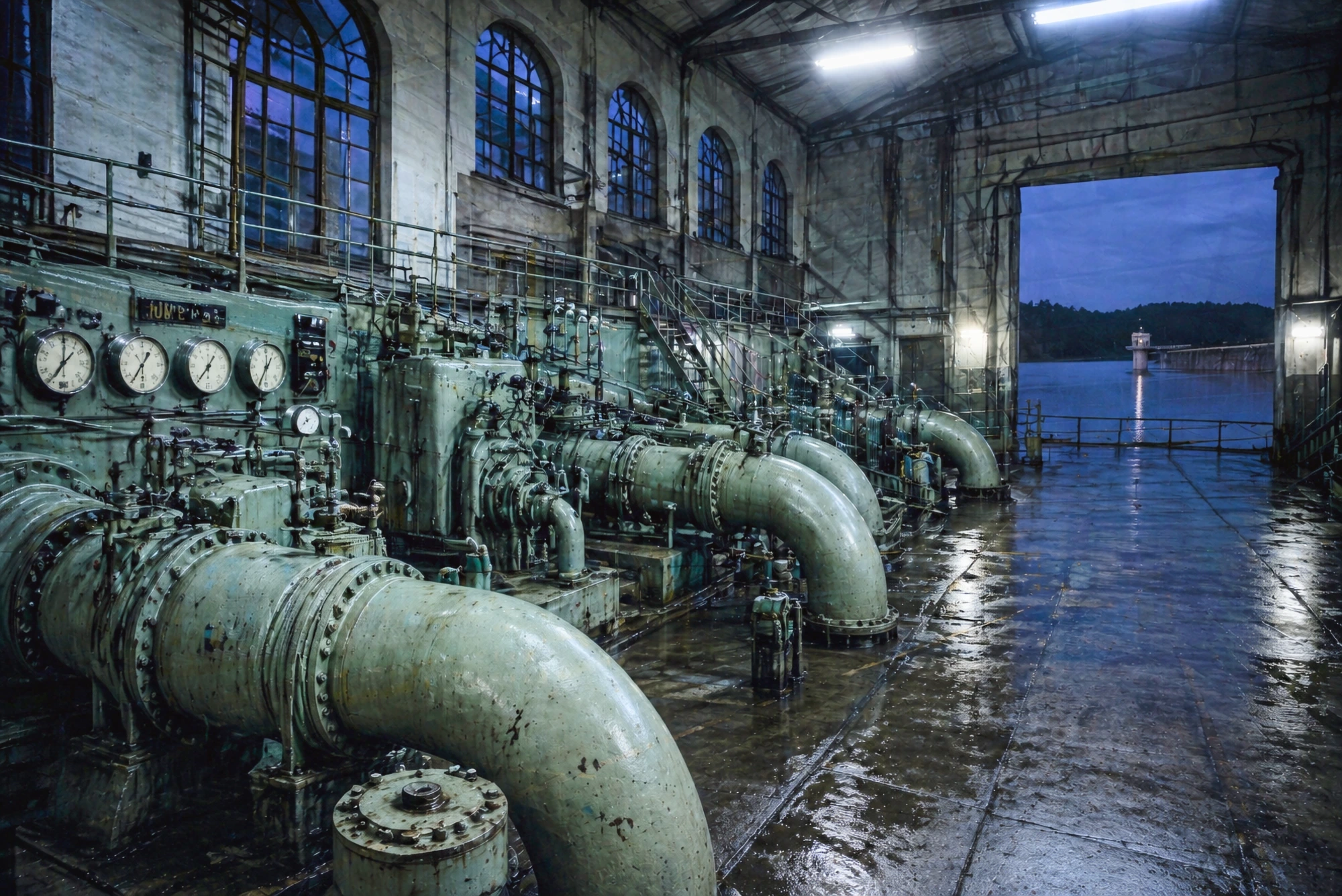
Pump stations regulate pressure. They move water—or something like it—from one place to another. Pipes converge. Valves hold. Gauges register. The space is compact, enclosed, and often subterranean or remote. The surfaces are damp. The sound is low and continuous—if not present, then implied. They are intestinal and vascular, deeply biological with liquid flow and occasional venting.
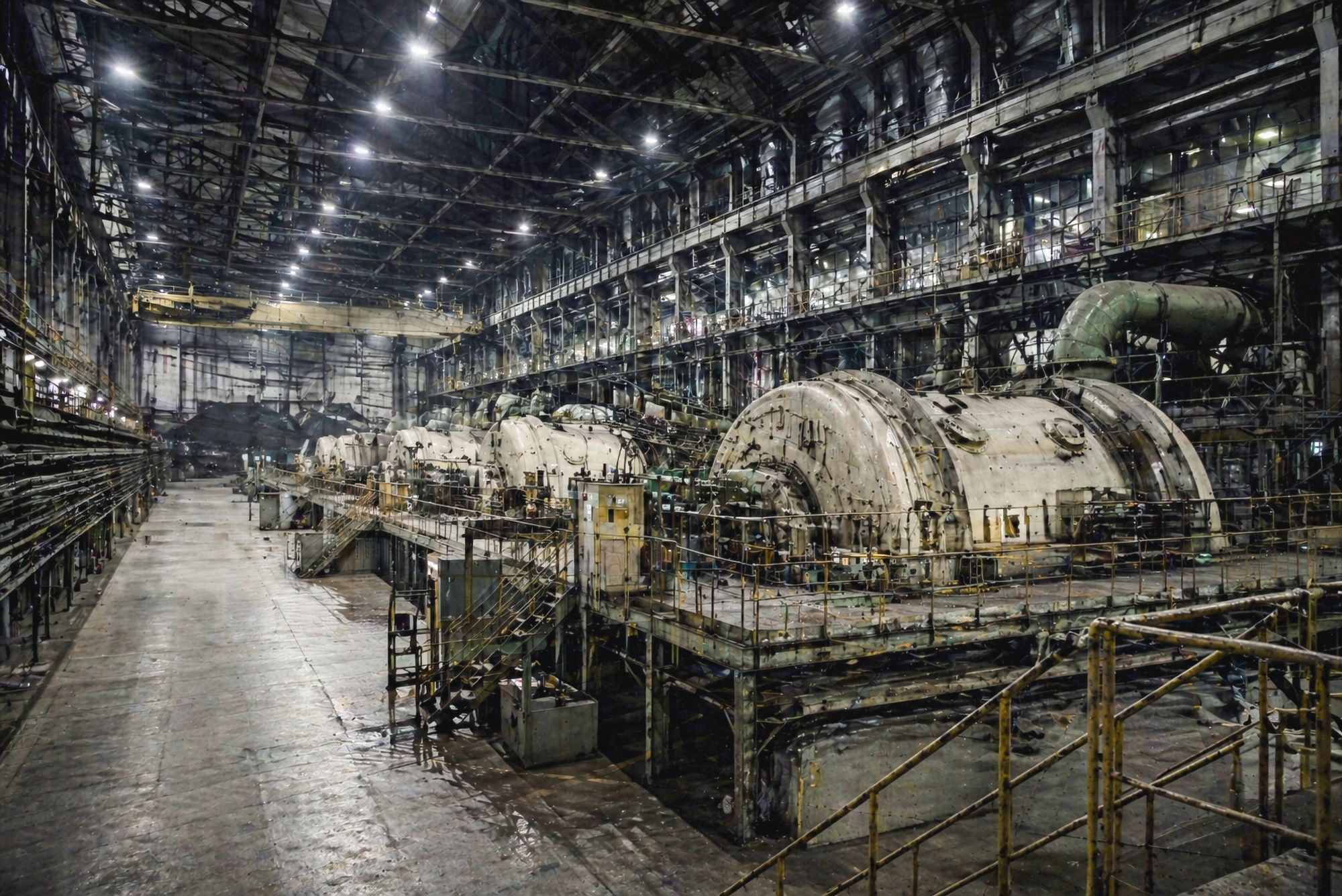
Power stations generate and distribute energy. Turbine halls, switchgear rooms, cable runs, all structures built to contain and direct force. The scale is often overwhelming with their vast volumes, hard surfaces, and echoing spaces. The machinery may be silent, but the architecture embodies power. You sense rotation, vibration, heat. You sense output—even when none is visible. The places are liminal and charged. They are strange analogues of muscle and nerve: raw motive power and electrical signals. They resonate with latent agency. They are sleeping predators.
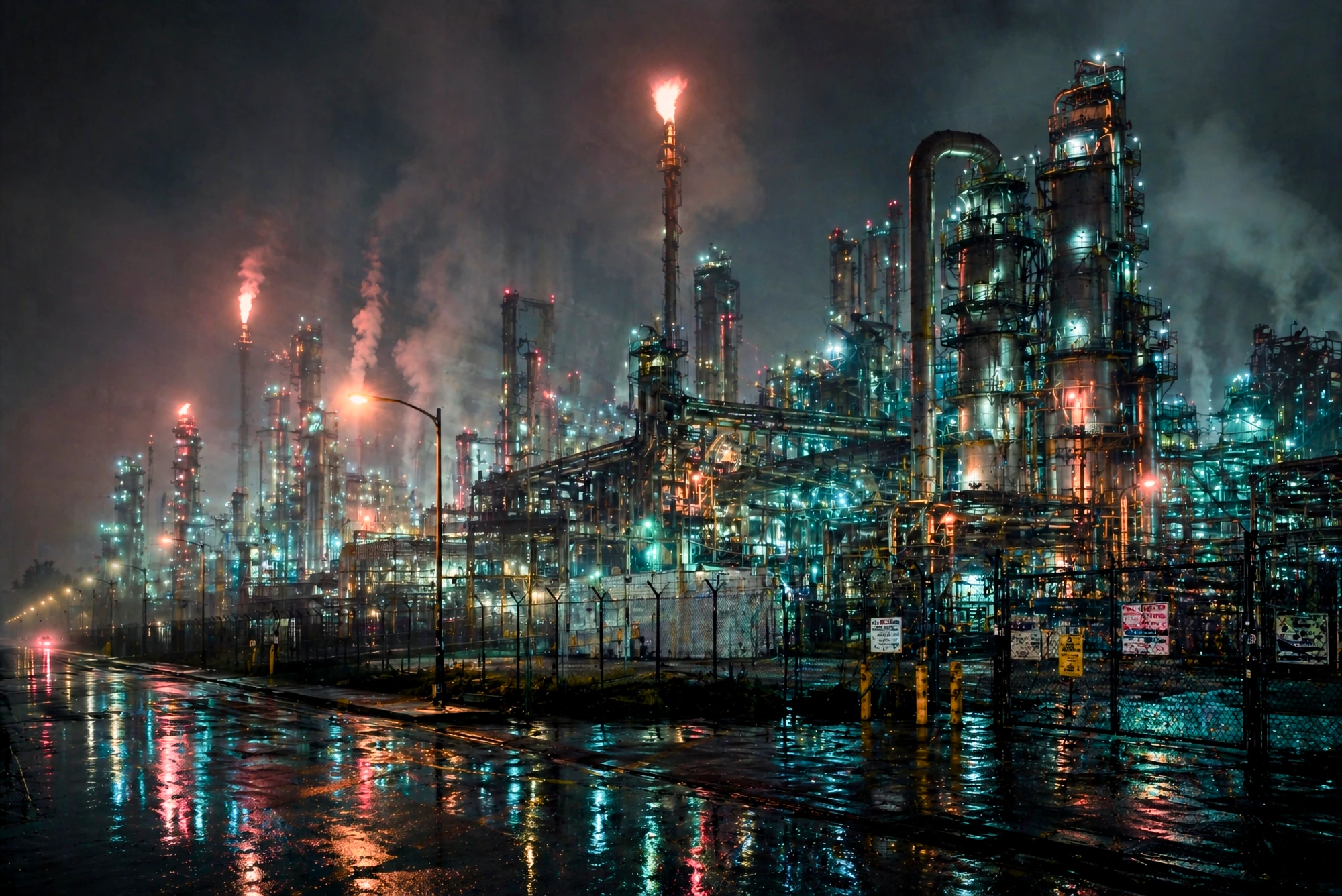
Refineries are systems of separation and conversion. Towers, pipes, tanks, columns—linked in dense networks. Fluids are heated, cooled, pressurised, distilled. Components extracted, recombined, redirected. The structure is difficult to parse. There is no obvious entrance or centre. Just a field of verticals and lines, extending beyond comprehension. Function is not obvious—they have a cryptic anatomy.
Refineries feel unstable—not because they are poorly designed, but because they are finely balanced. A slight shift would change everything. There is the threat of explosion. They have a vast and latent fury. Wake them, and they roar. And consume you.
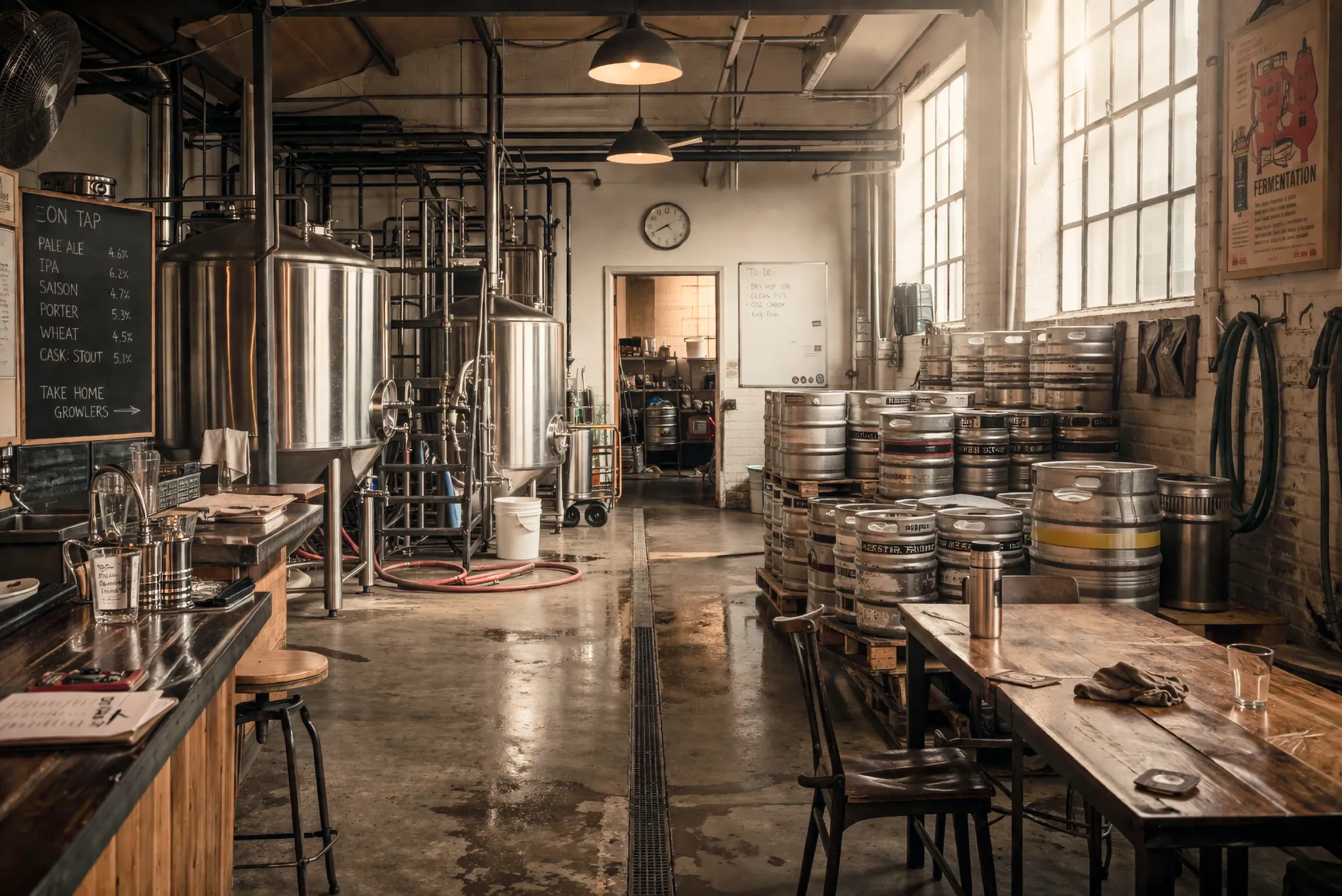
Breweries are softer, but no less structured. Vessels, tanks, pipes. Controlled environments for transformation over time. Unlike factories, the process is slow. Fermentation replaces assembly. Change is internal and invisible. The spaces are clean and organic, with liquids in suspension, gases released slowly, and temperatures controlled. Breweries are deeply intestinal— the bellies of mechanical beasts. And their product is intoxicating. When you drink it, you cannot run. Seductive and impeding.
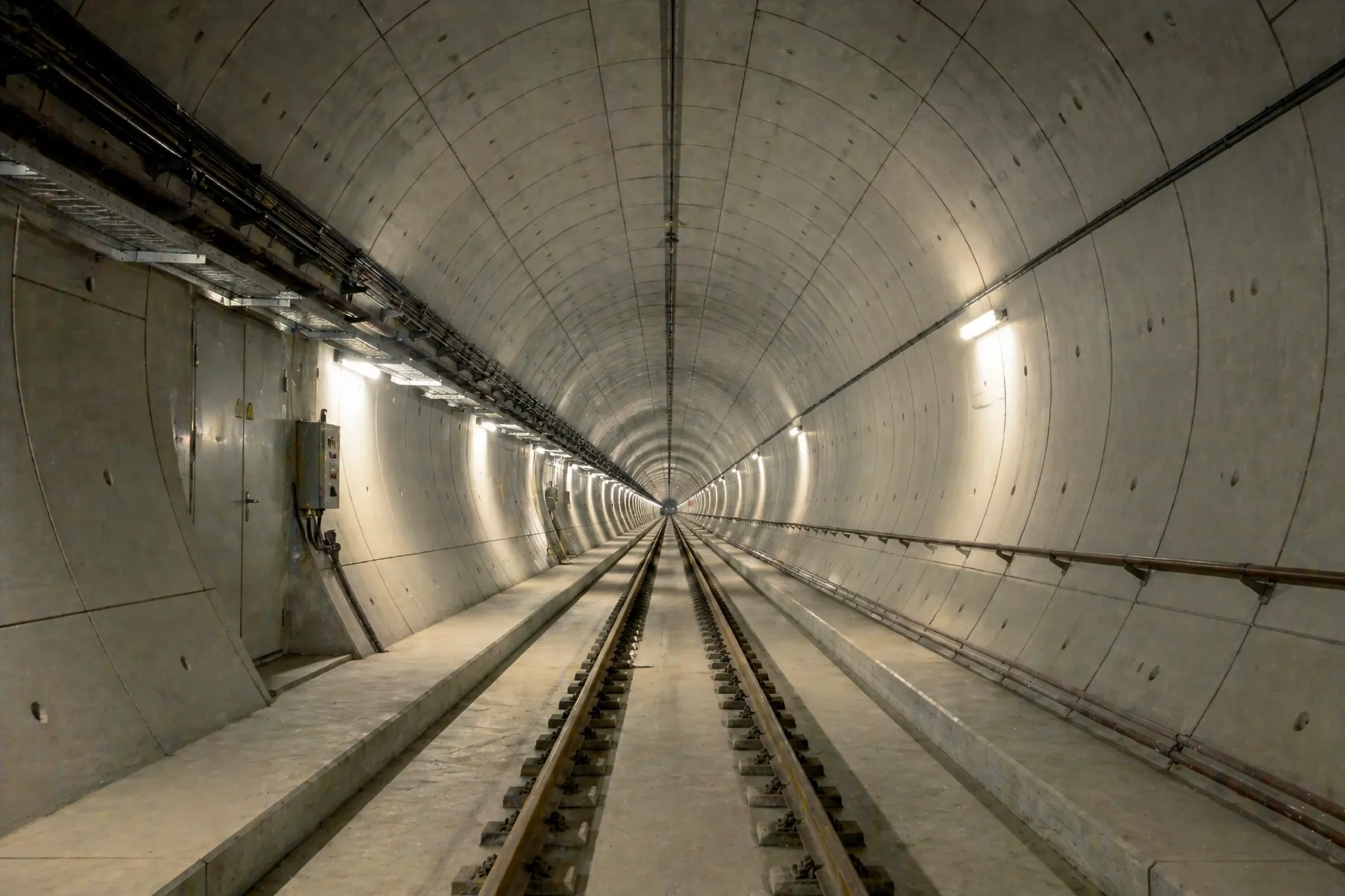
Tunnels carry people, fluids, cables, and air. They connect systems that are otherwise separate. Long, enclosed, directional. No branching, or too many branches. The path is fixed, but the destination is not always clear. Sound travels. Light diminishes. Distance compresses. Tunnels are liminal sewers and conduits on a grand scale. And they echo primal geometries:
Predator landscapes—traps and funnels for prey
Ambivalent burrows that could offer refuge or conceal monsters
Guts or vessels writ large—the mouths and throats of monsters.
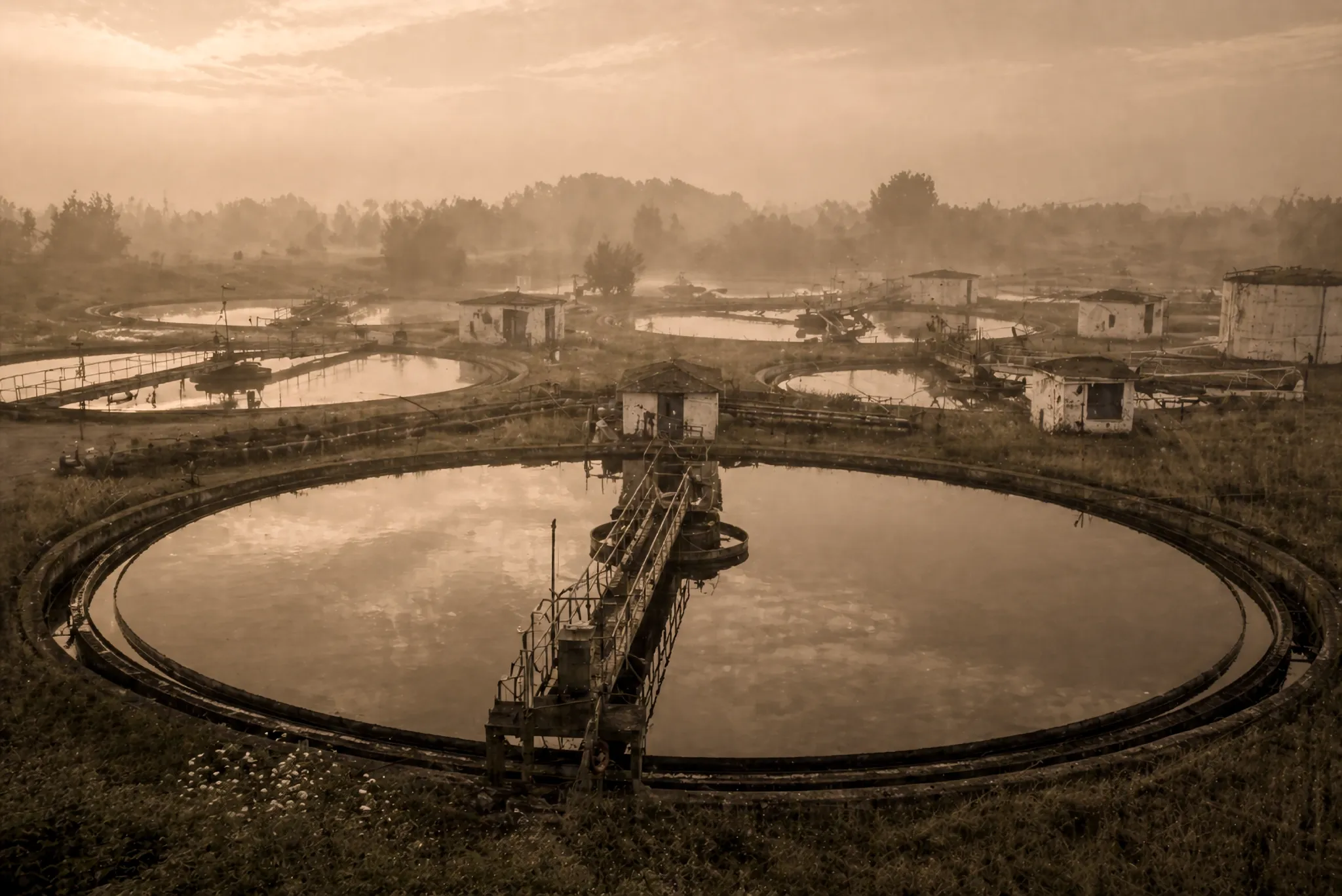
Sewage farms purify and process. Filtration, sedimentation, chemical adjustment. Pools, basins, channels. Surfaces are calm, but layered with activity. Particles settle, flows circulate, and contaminants are filtered. The water appears still, but is not. There is a tension between clean and unclean and safe and unsafe. They are weird and engineered landscapes full of bizarre ponds and pools and reservoirs. Their waters feel predator infestated. The plant looks like an alien camping ground where things that lie in water lie in wait. A sewage works is part engineered waterfeatures, part dinosaur landscape, part giant inverted lily pads, and part flying saucer spaceport. It's half grown and half built. And half land and half water.
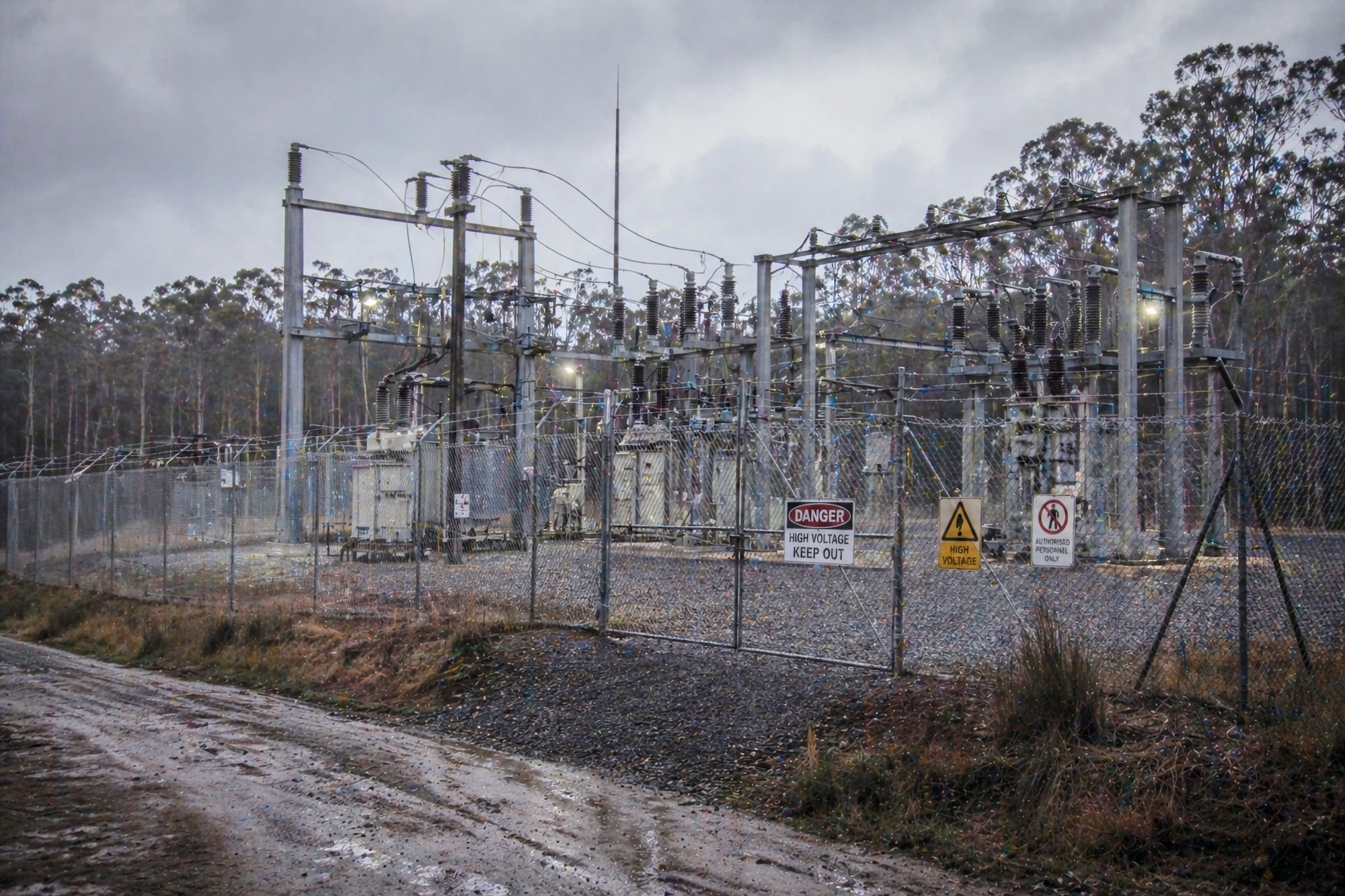
Substations redistribute electricity. Transformers, insulators, grid structures. There is little movement. No obvious process. Just static arrangements of components spaced deliberately apart. The danger is invisible. No sound, no motion—only distance and warning. The layout feels intentional and threatening. You are meant to keep back, not understand. If they are isolated they feel alien. Those that nestle close to dwellings create a huge sense of charge. They also hint at a watching intelligence, a node in a nervous system—half brain, half stingray.
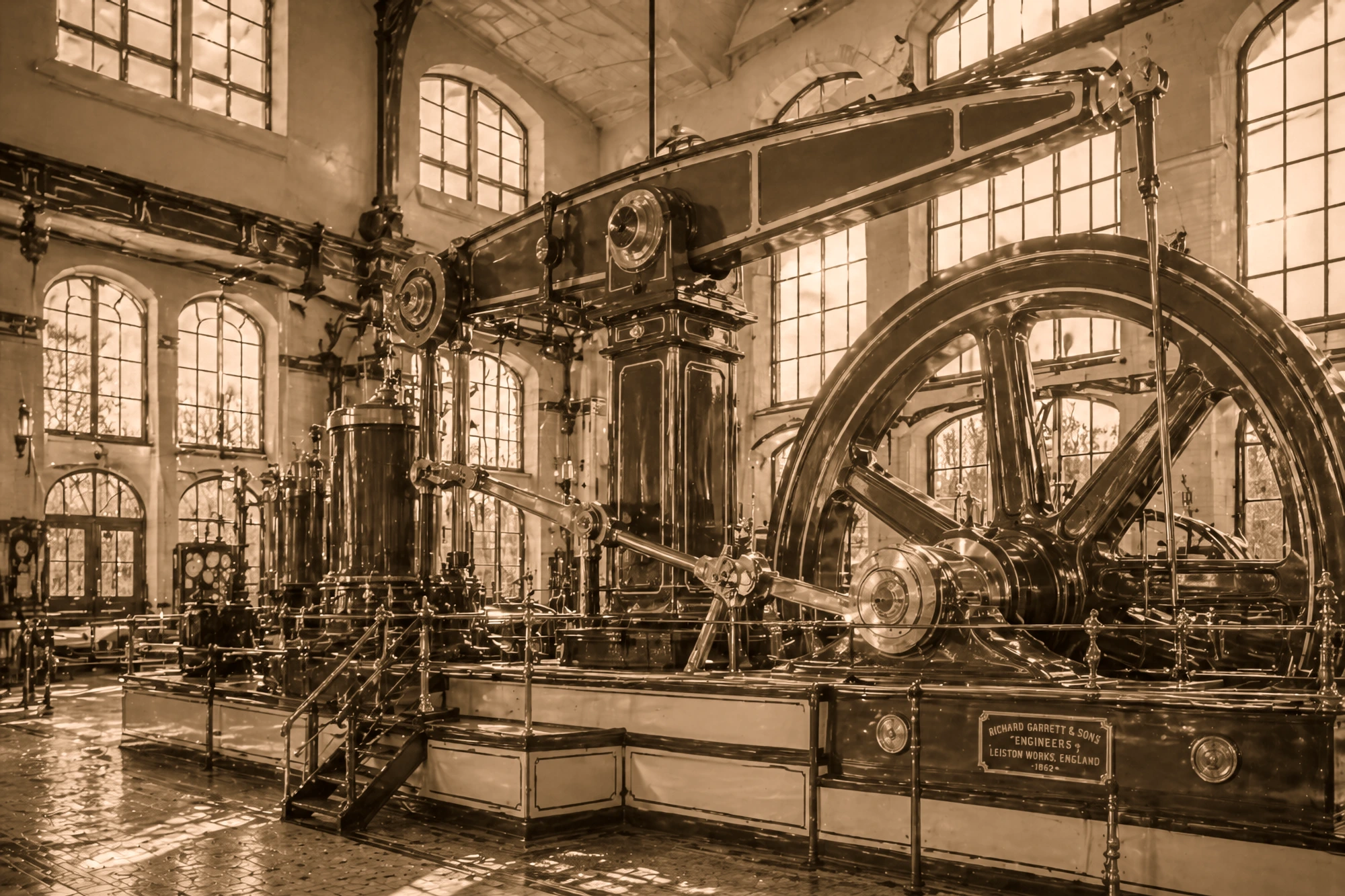
Factories and their allies are intentional spaces, uncompromising, alien, and vast. They are an architecture for machines where humans feel incidental. Concentrated on their tasks, these mechanical beings seem hunched against our presence. We tread carefully lest they look up and take notice. This is predator inspection of robots.
At the same time, some have a chilling, killing floor aesthetic. Hard edged, mechanical, unforgiving. They hint at mechanised slaughterhouses, robot-run abattoirs.
In 1996, Russell Kightley completed a manuscript on what he called “bowel stirring things.” It remained unpublished for thirty years.
In 2026, he revived and refined it as Bowel Stirring Things: A Natural History of Mental Laxatives & The Bowel as Predator Detector—a study of unsettling places and the geometries that provoke an immediate, visceral response.