Success message
Error message
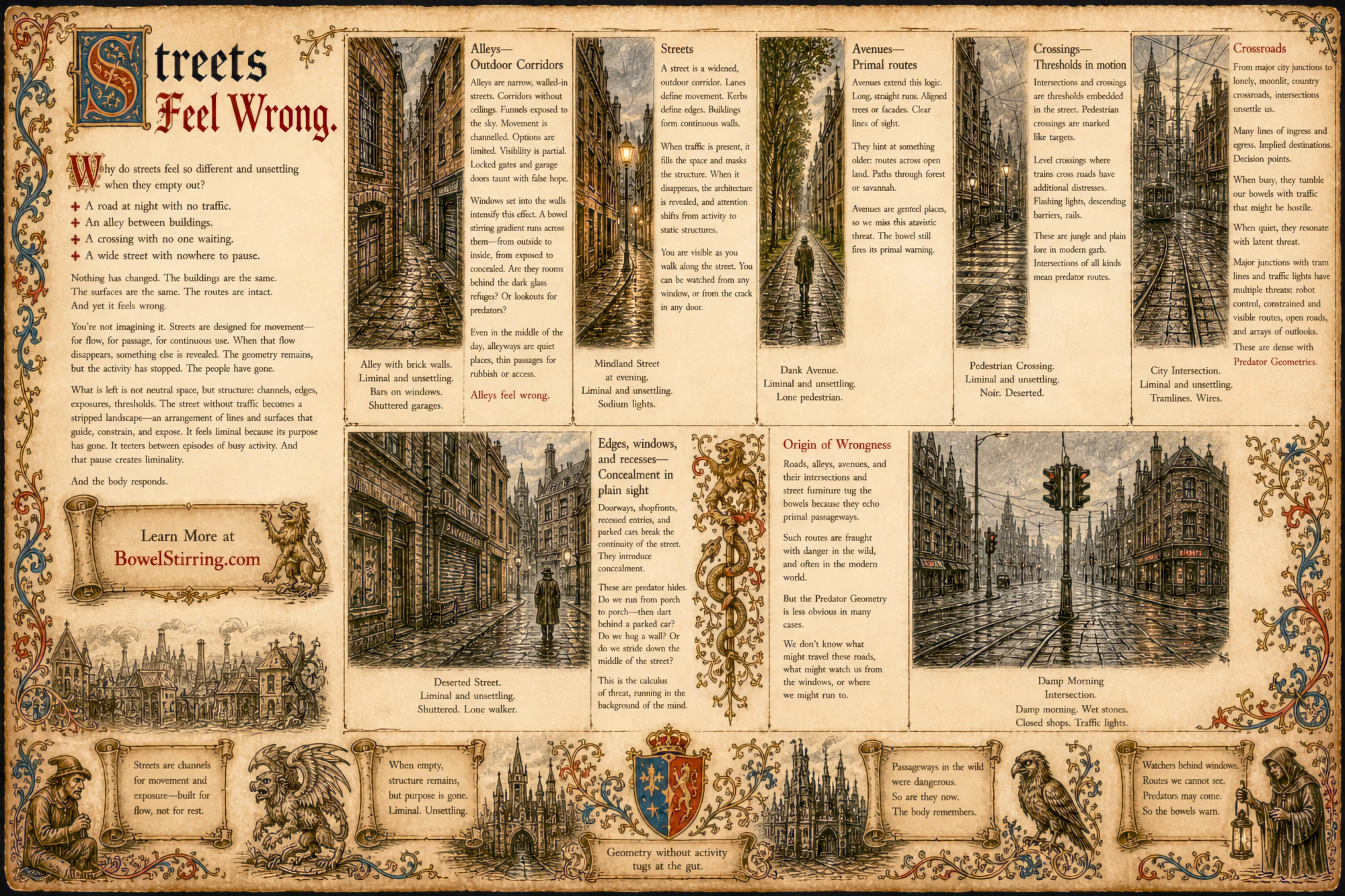
Why do streets feel so different and unsettling when they empty out?
A road at night with no traffic. An alley between buildings. A crossing with no one waiting. A wide street with nowhere to pause.
Nothing has changed. The buildings are the same. The surfaces are the same. The routes are intact. And yet it feels wrong.
You’re not imagining it. Streets are designed for movement—for flow, for passage, for continuous use. When that flow disappears, something else is revealed. The geometry remains, but the activity has stopped. The people have gone.
What is left is not neutral space, but structure: channels, edges, exposures, thresholds. The street without traffic becomes a stripped landscape—an arrangement of lines and surfaces that guide, constrain, and expose. It feels liminal because its purpose has gone. It teeters between episodes of busy activity. And that pause creates liminality.
And the body responds.
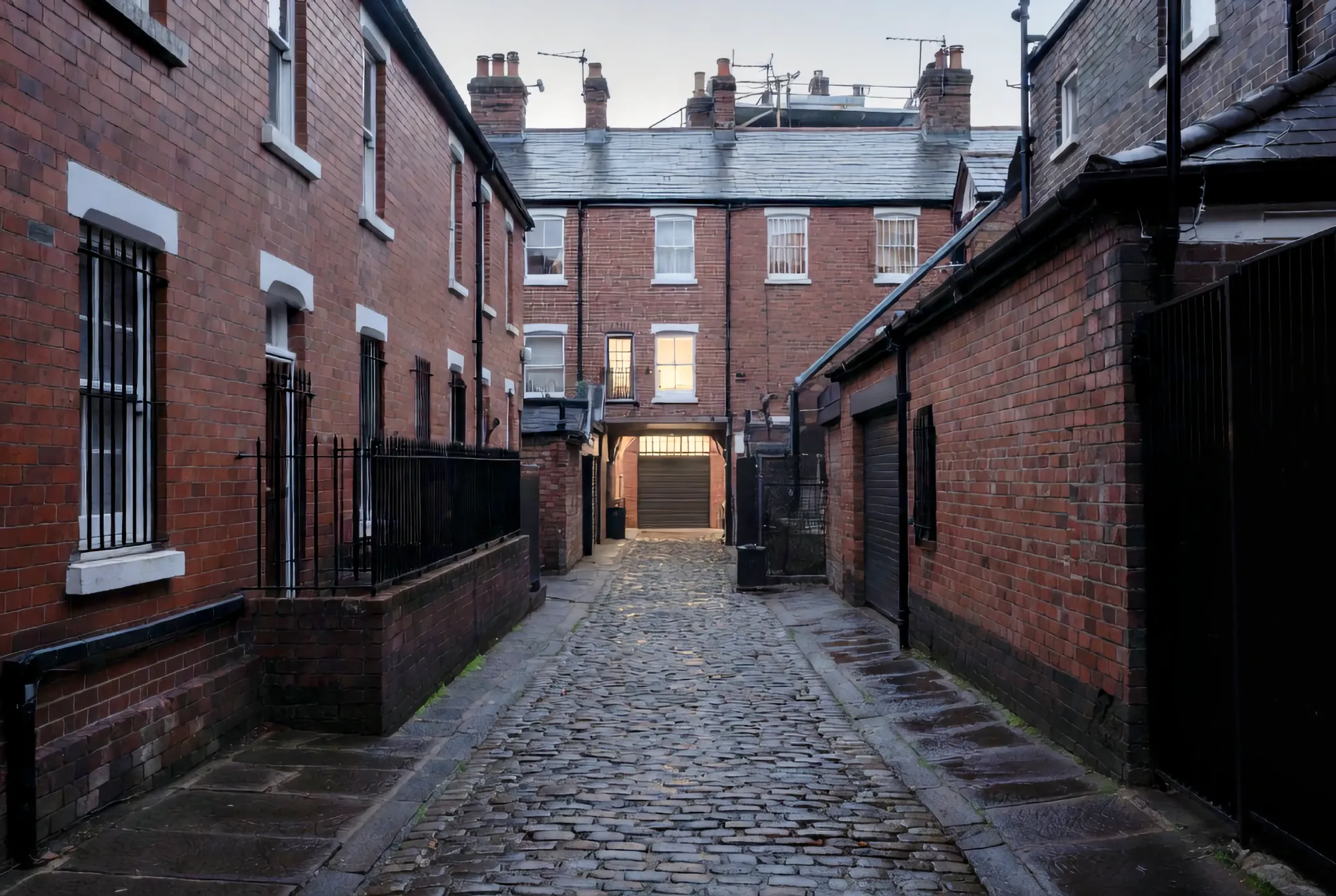
Alleys are narrow, walled-in streets. Corridors without ceilings. Funnels exposed to the sky. Movement is channelled. Options are limited. Visibility is partial. Locked gates and garage doors taunt with false hope. Alleyways are constructed straits, confined, dangerous, and dripping with Predator Geometry.
Windows set into the walls intensify this effect. A bowel stirring gradient runs across them—from outside to inside, from exposed to concealed. Are they rooms behind the dark glass refuges? Or lookouts for predators? Doors—rickety wood or burnished steel—chatter and chide, oscillating between escape and ambush.
Even in the middle of the day, alleyways are quiet places, thin passages for rubbish or access. They are the coy channels at the backs of houses and industrial buildings—more toilet than showroom.
Alleys feel wrong.
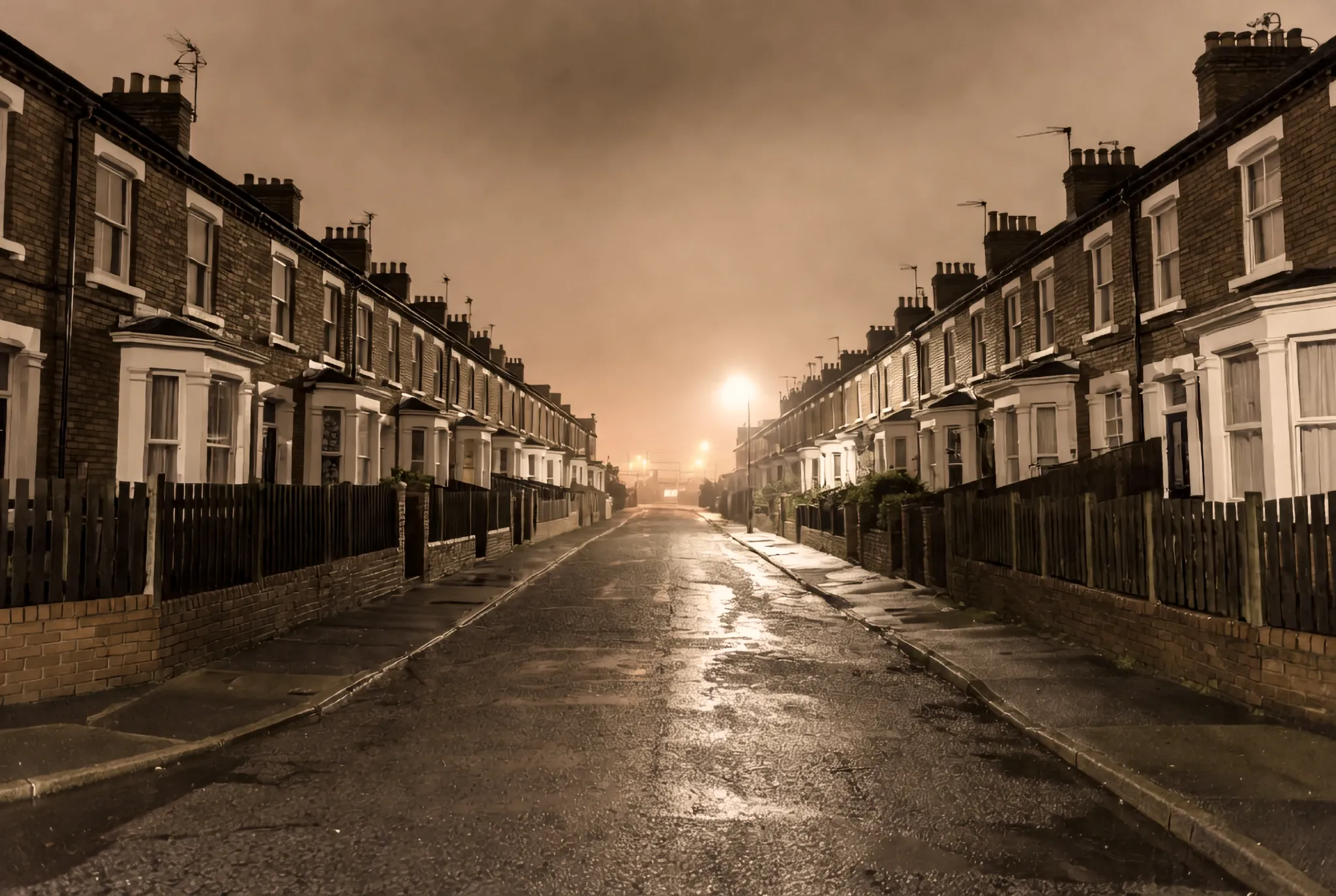
A street is a widened, outdoor corridor. Lanes define movement. Kerbs define edges. Buildings form continuous walls. You can move freely—but within bounds. When traffic is present, it fills the space and masks the structure. When it disappears, the architecture is revealed, and attention shifts from activity to static structures. This reveals the geometry.
You are visible as you walk along the street. You can be watched from any window, or from the crack in any door. This creates a primal threat geometry.
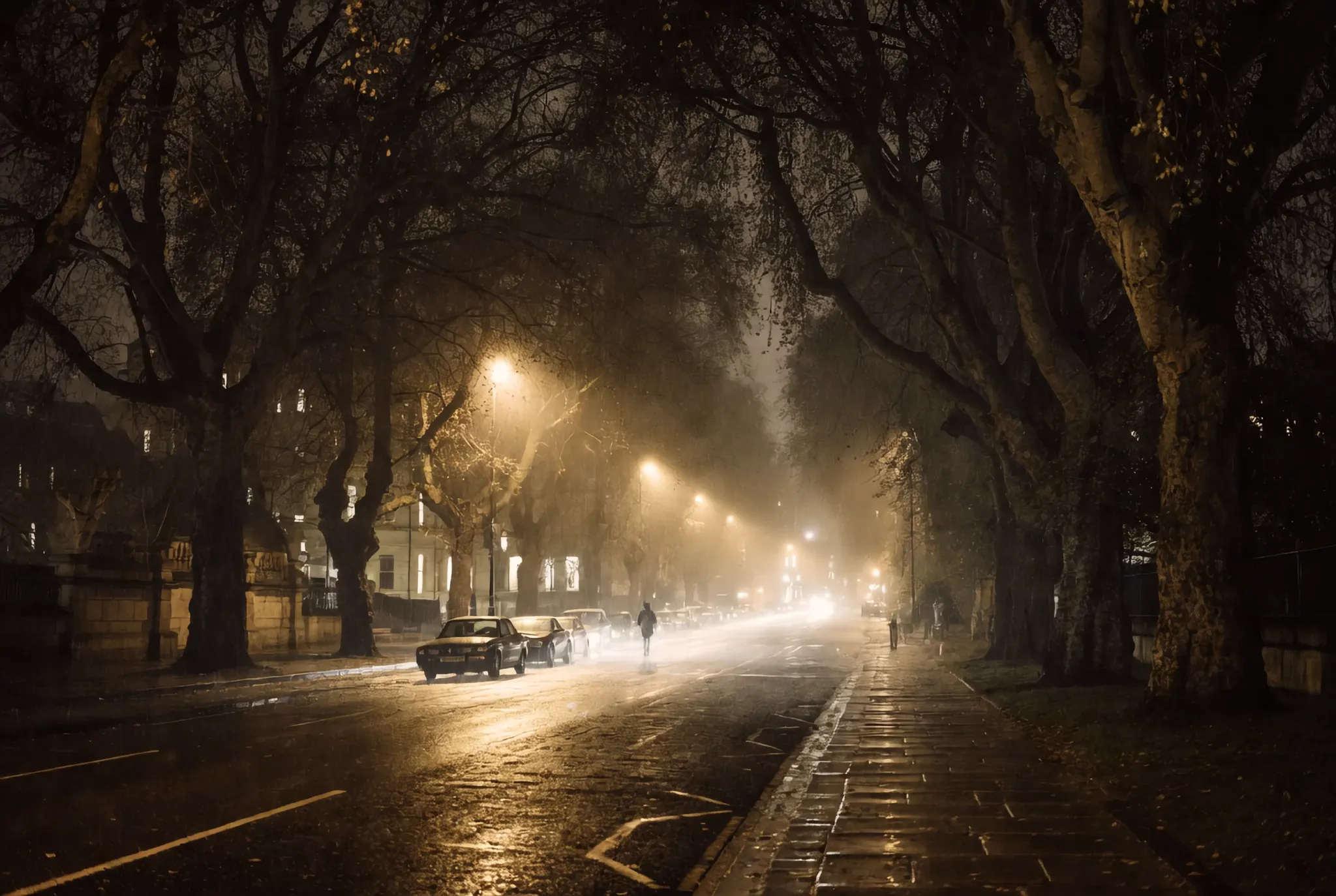
Avenues extend this logic. Long, straight runs. Aligned trees or facades. Clear lines of sight. They hint at something older: routes across open land. Paths through forest or savannah. Movement corridors where direction is fixed and visibility extends ahead. They are less immediately bowel stirring than alleys—but they carry a deeper signal: watchers in the trees or in the jungle. But avenues are genteel places, so we miss this atavistic threat. The bowel still fires its primal warning.
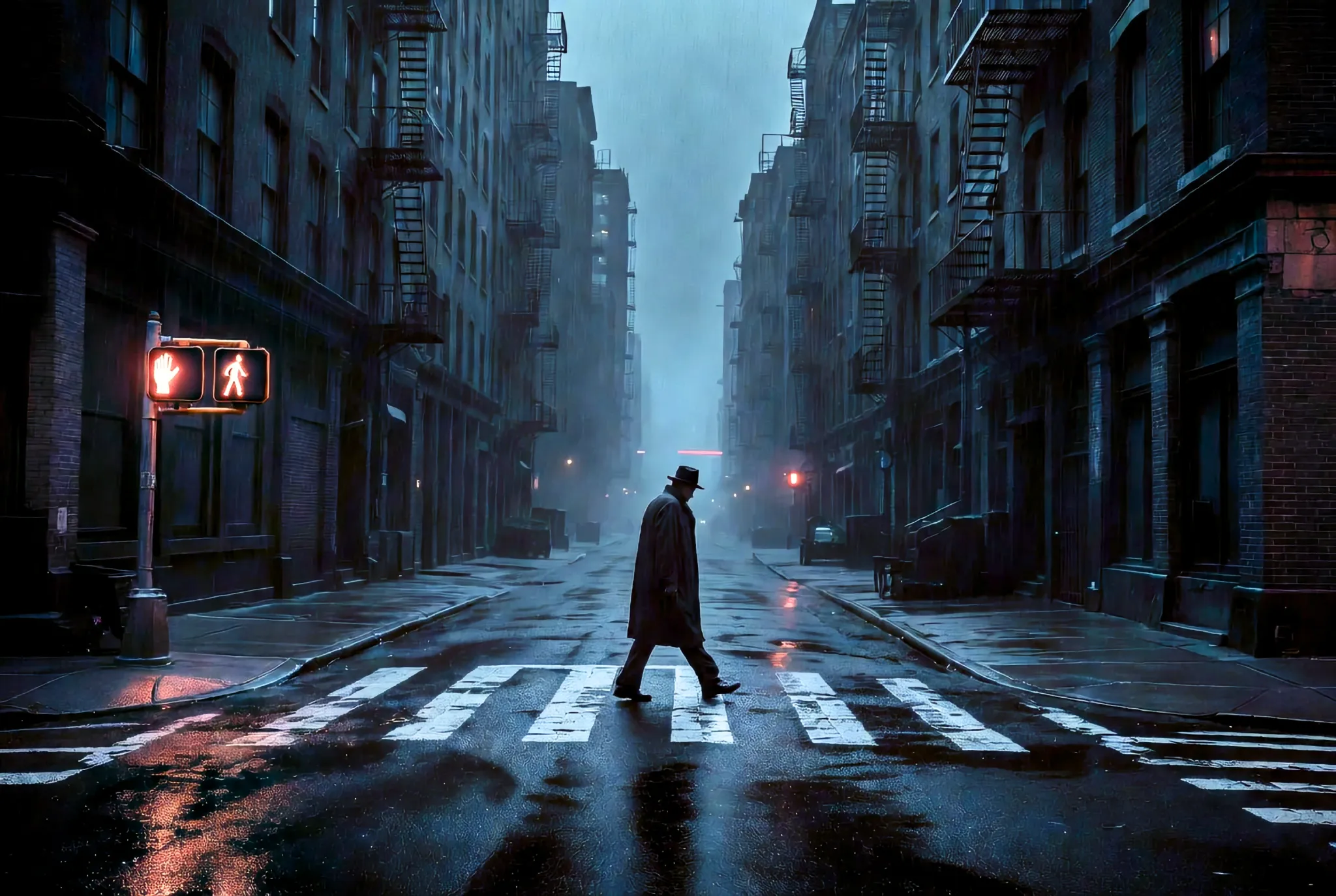
Intersections and crossings are thresholds embedded in the street. Pedestrian crossings are marked like targets. Consciously, we know that's for safety, but our survival heuristics see visibility.
Level crossings where trains cross roads have additional distresses. They might be mechanical, their flashing lights and descending barriers give a sense of robotic control. The rails themselves define movement, which is unsettling. And great monstrous machines can roar down them, like stampeding beasts. This is jungle and plain lore in modern garb. And intersections of all kinds mean predator routes.
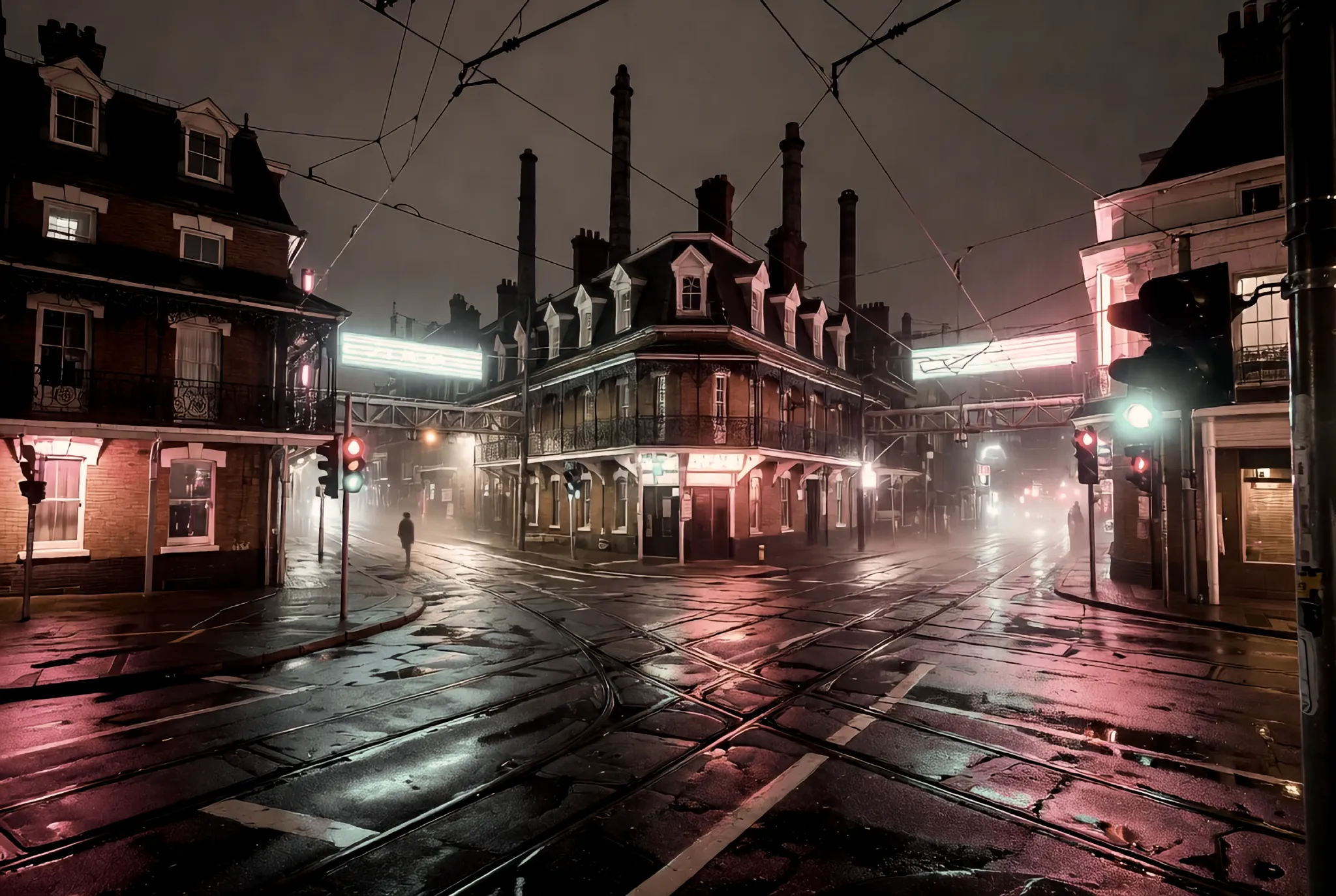
From major city junctions to lonely, moonlit, country crossroads, intersections unsettle us with their many lines of ingress (predators can arrive from many directions) and egress (we can flee down many roads). There is also the implied range of destinations. Crossroads are decision points, and we must weigh the risks and benefits. "At a crossroads" means exactly this.
When busy, intersections tumble our bowels with traffic that might be hostile—that tram might deliver an assassin. When quiet, they resonate with latent threat. Major junctions with tram lines and traffic lights have multiple threats: robot control, constrained and visible routes, open roads, and arrays of outlooks. These are dense with Predator Geometries.
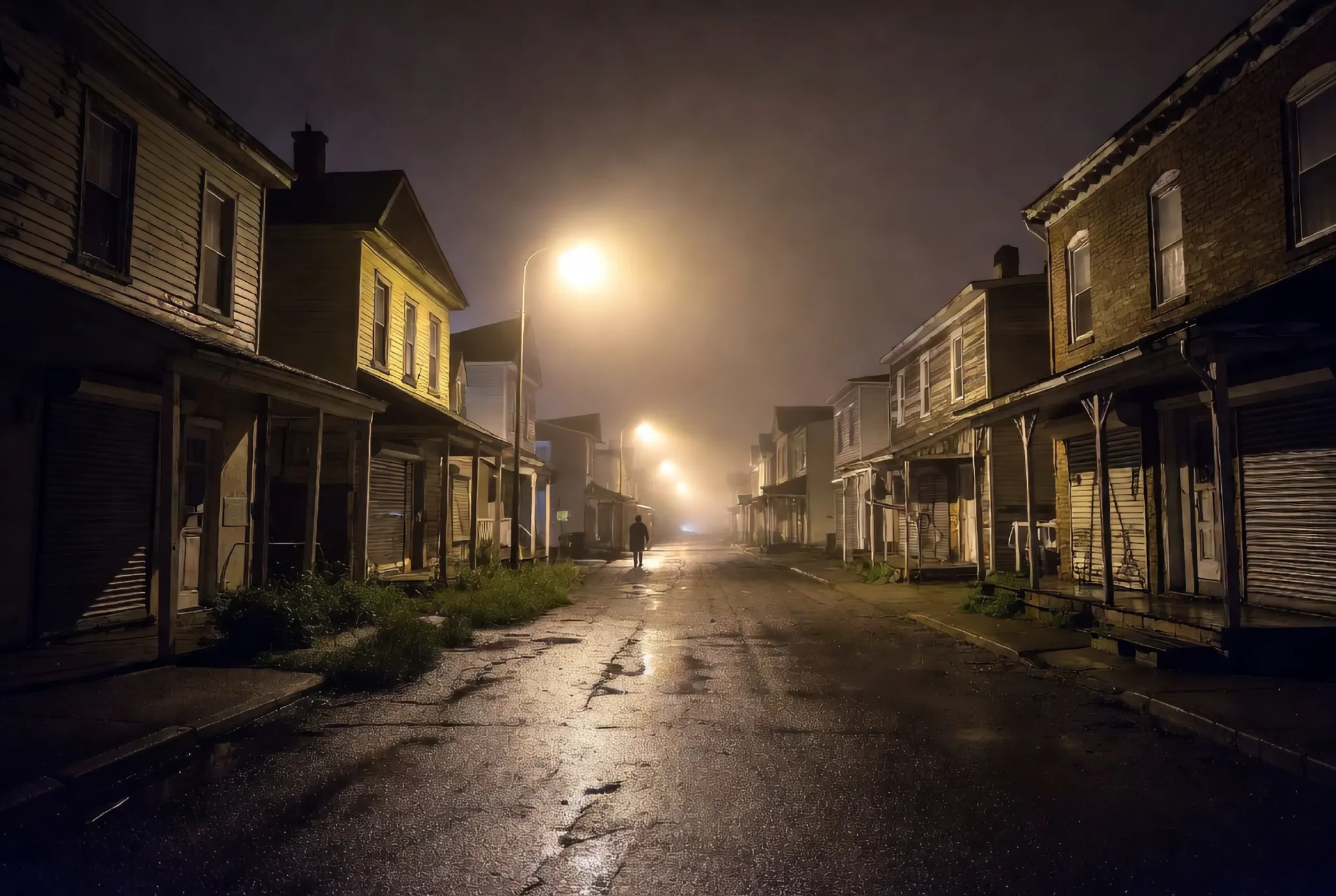
Doorways, shopfronts, recessed entries, and parked cars break the continuity of the street. They introduce concealment. These are predator hides. Do we run from porch to porch—then dart behind a parked car? Do we hug a wall? Or do we stride down the middle of the street, hoping our swagger dissuades the things that lurk? This is the calculus of threat, running in the background of the mind.
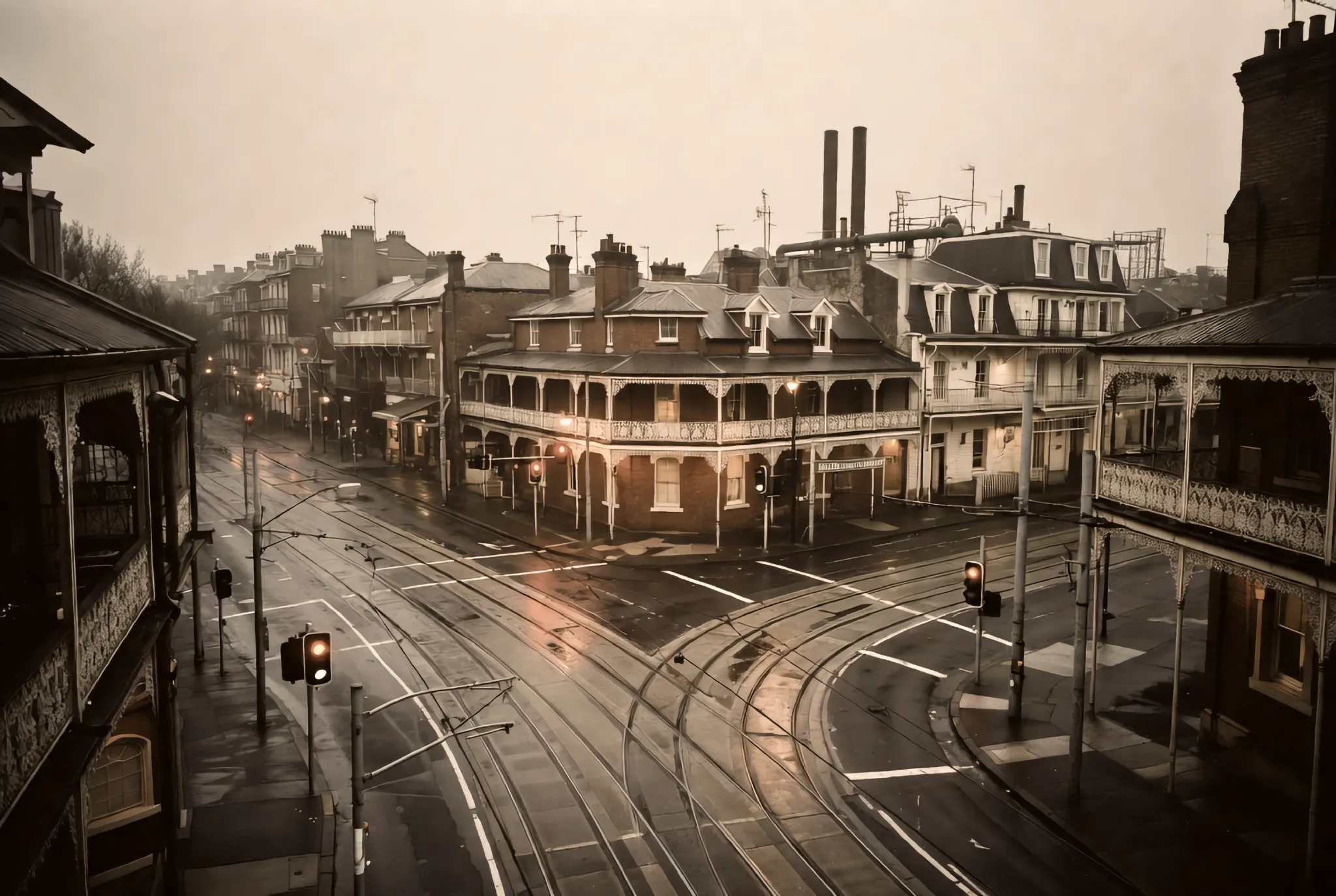
Roads, alleys, avenues, and their intersections and street furniture tug the bowels because they echo primal passageways. Such routes are fraught with danger in the wild, and often in the modern world. But the Predator Geometry is less obvious in many cases. We don't know what might travel these roads, what might watch us from the windows, or where we might run to.
In 1996, Russell Kightley completed a manuscript on what he called “bowel stirring things.” It remained unpublished for thirty years.
In 2026, he revived and refined it as Bowel Stirring Things: A Natural History of Mental Laxatives & The Bowel as Predator Detector—a study of unsettling places and the geometries that provoke an immediate, visceral response.